
Kanazawa is the city that did not burn. While much of Japan was reduced to ash in the firebombing campaigns of the 1940s, Kanazawa — on the Sea of Japan coast, too remote and too lightly industrialized to warrant a strategic target — survived with its Edo-period fabric largely intact. The result is a city of exceptional coherence: samurai districts, a geisha quarter, a restored castle, and Kenroku-en garden, all woven into a compact city of 450,000 that operates on its own unhurried schedule.
Kenroku-en
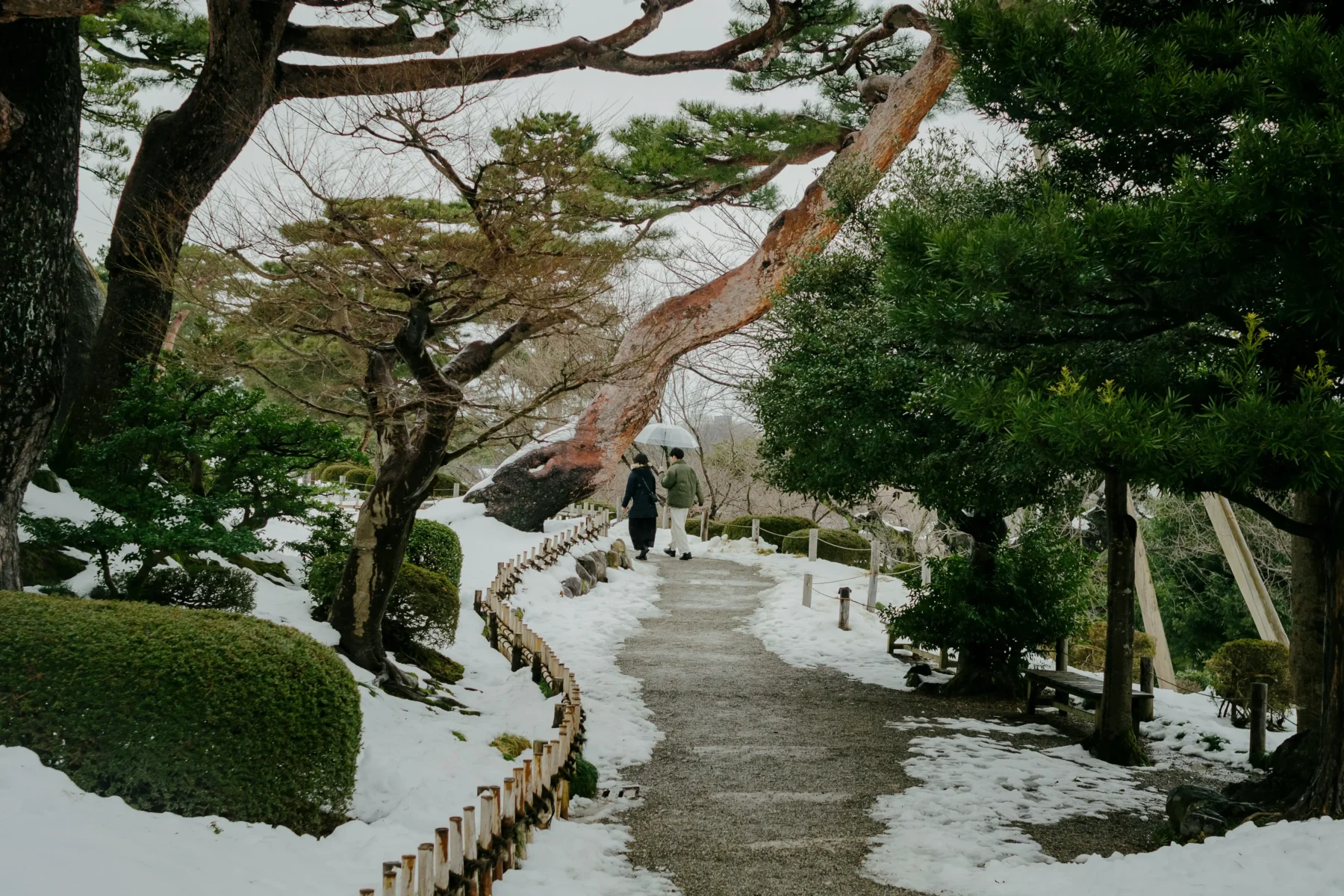
The garden is the reason most visitors come, and it earns the reputation. Kenroku-en — the name translates roughly as “garden of six attributes,” referring to the classical Chinese criteria for a perfect garden — was developed over two centuries by the Maeda clan, the lords who ruled this domain under the Tokugawa shogunate. It is large enough to walk for an hour without retracing steps, with a central pond, stone lanterns, ancient pine trees trained into horizontal shapes with wooden props, and a hillside that gives views over the city and the distant mountains. In February, the yukitsuri — ropes strung from tall poles to protect the trees from snow damage — are still visible. The garden is at its most crowded on weekends in cherry blossom season and at its most peaceful on a winter morning when the paths are quiet and the snow is fresh.
Higashi Chaya and the Historic Districts
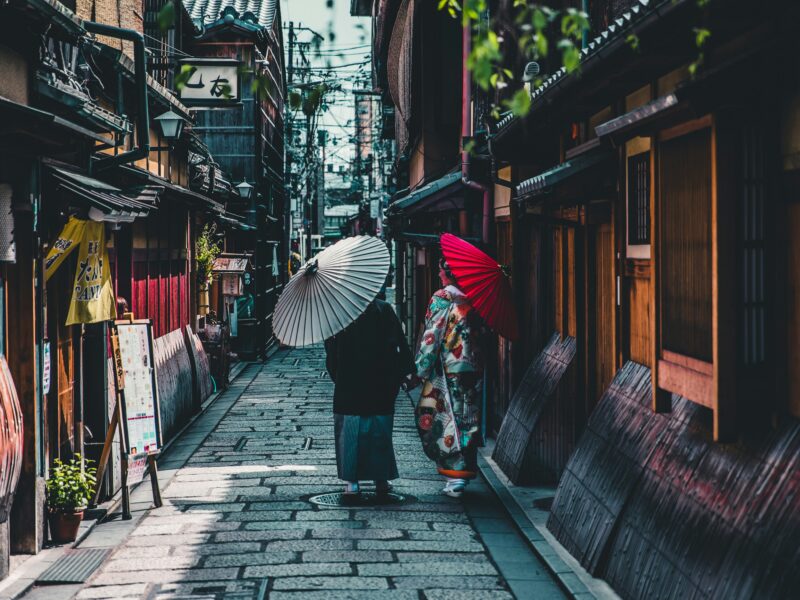
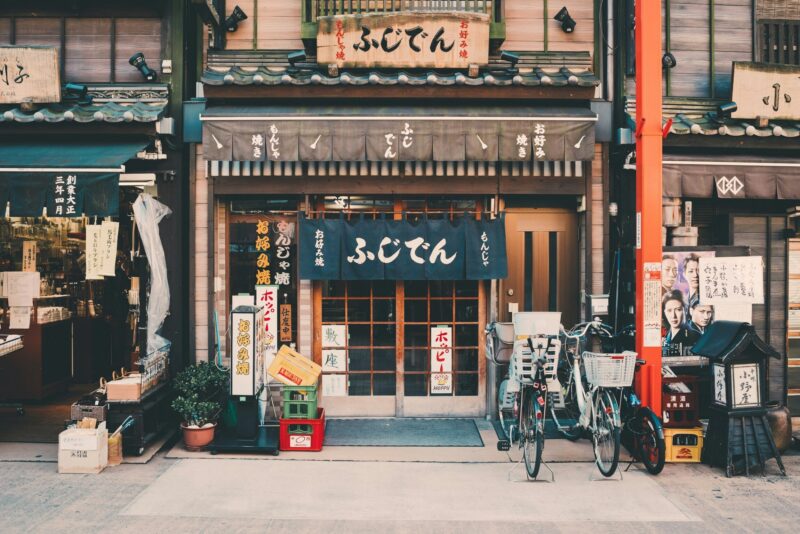
Kanazawa has three chaya — geisha entertainment — districts, of which Higashi Chaya is the largest and best preserved. The main street is a single block of two-storey latticed wooden facades, most of which now operate as tea houses, gold-leaf shops, or cafés rather than traditional geisha establishments. It is prettier in the early morning before the tour groups arrive. The two samurai districts, Nagamachi and Nomura, are a twenty-minute walk away: narrow lanes between high earthen walls, with one villa open to visitors showing how the lower-ranking samurai actually lived — austerely, with a small formal garden as the one extravagance.
Food and the Omicho Market
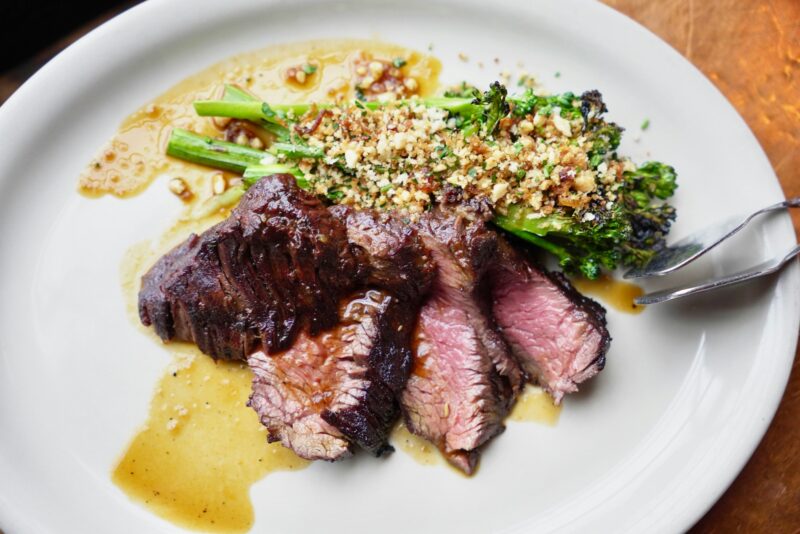
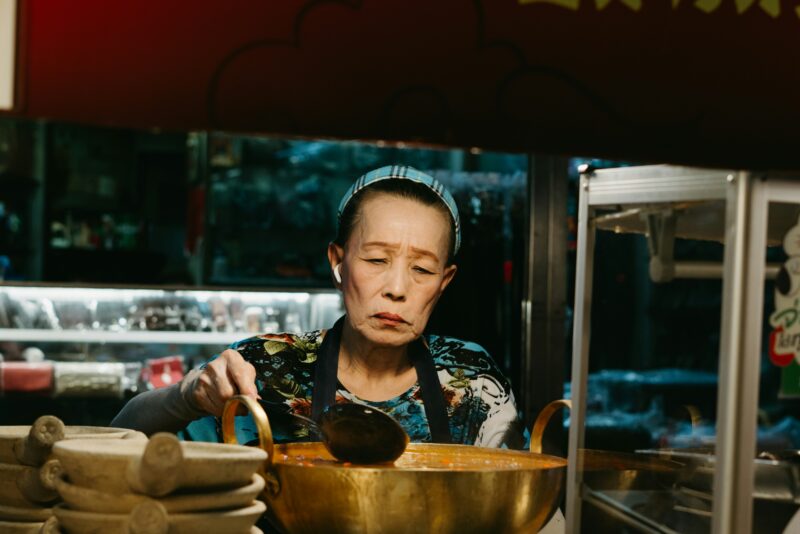
Kanazawa sits between the Sea of Japan and the mountains, which means the seafood comes in fresh every morning and the rice, sake, and vegetables from the surrounding Kaga plain are among the best in the country. The Omicho market — a covered market of several hundred stalls running since the 18th century — is the place to understand this. The snow crab is in season from November to March; outside that window, the yellowtail, sea bream, and raw shrimp still make a compelling case. The city’s kaiseki tradition, a multi-course formal meal that Kanazawa claims as its own alongside Kyoto, is best experienced at one of the restaurants around Kenroku-en, though the price reflects the seriousness of the cooking.
Getting There
The Hokuriku Shinkansen connects Kanazawa to Tokyo in under two and a half hours, making it straightforward as a stop on a longer Japan itinerary. Kyoto is two hours by limited express. The city is compact enough that most sights are walkable from the central station, and the loop bus covers the main attractions for those who prefer not to walk. Two full days is the minimum; three allows for the day trip to the Noto Peninsula, a rugged coastal landscape north of the city that rewards the extra travel.