
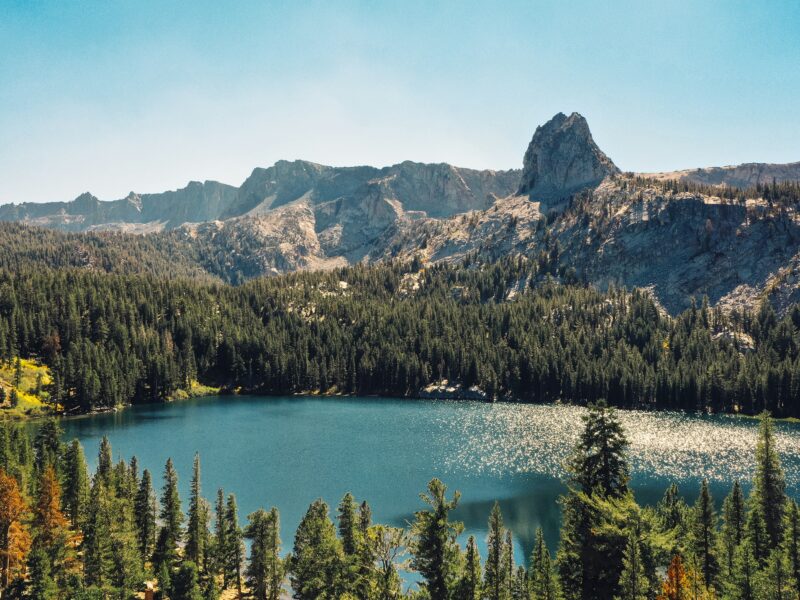
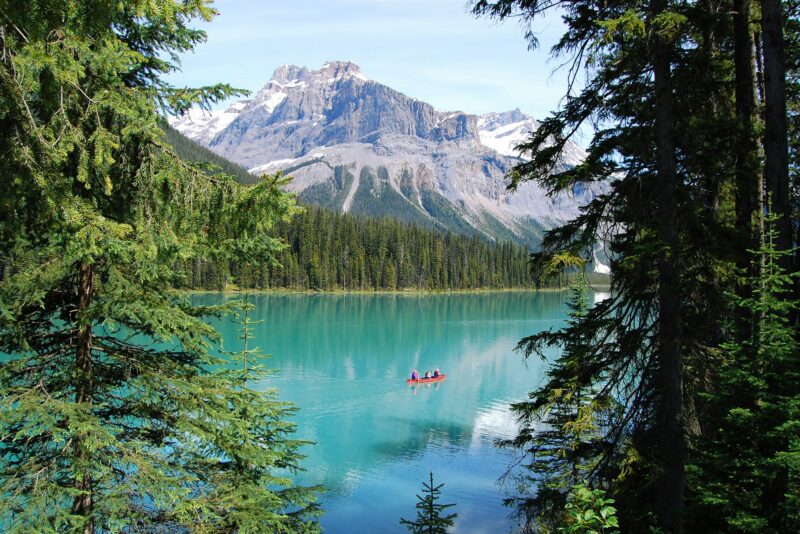
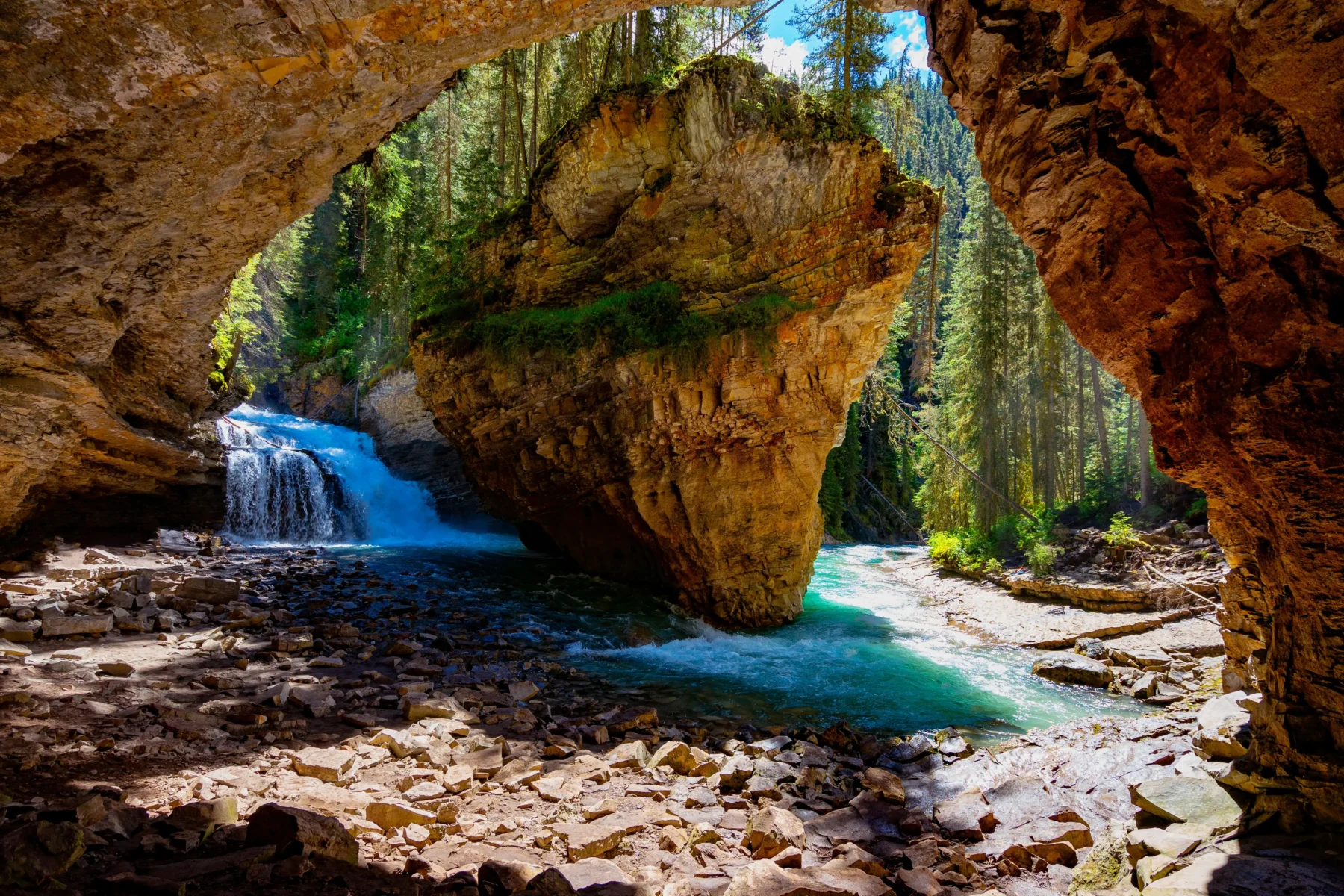
Johnston Canyon Resort sits at the mouth of one of the most dramatic gorges in the Canadian Rockies, its red-roofed cabins arranged along the bank of Johnston Creek in Banff National Park. The resort has been here in some form since the 1920s, and the fact that it doesn’t feel overbuilt is one of its great virtues — the mountains and the canyon do all the work, and the cabins simply give you a place to sleep that is already inside the landscape rather than at its edge.
The Canyon
The trail into Johnston Canyon begins right at the resort and follows a catwalk bolted directly into the canyon walls, threading through narrows where the creek has carved the limestone into shapes that look architectural. The lower falls are reached in about a kilometer — a 30-meter plunge into a turquoise pool, framed by overhanging rock close enough to feel the spray. The upper falls are further and more demanding, dropping 40 meters into a deeper gorge that requires climbing above the canyon rim. Beyond the upper falls, the trail continues another four kilometers to the Inkpots, seven cold-water springs that feed pools of vivid blue-green in the meadow above the treeline. The full round trip from the resort is around 12 kilometers, but even the short walk to the lower falls earns its keep.
The Cabins
The resort’s cabins range from basic to comfortable — none are luxurious in the contemporary sense, which is entirely the point. Waking up to the sound of the creek, a few paces from the trailhead, is the experience the resort sells and delivers. The setting does what no amount of spa facilities or thread-count upgrades could replicate. The on-site restaurant handles breakfast and dinner competently, and the proximity to Banff townsite — 26 kilometers east along the Bow Valley Parkway — means that the culinary options of the town are within easy reach for an evening out. The Parkway itself, the slower alternative to the Trans-Canada Highway, is worth driving for the elk sightings alone.
Banff and the Bow Valley
Johnston Canyon Resort makes a better base for Banff National Park than the townsite for travellers who came primarily for the mountains. Lake Louise is 45 minutes north, and the Icefields Parkway — widely considered one of the most spectacular drives in the world — begins there. The town of Banff itself is worth a day: the Whyte Museum of the Canadian Rockies holds a surprisingly rich collection of regional art and mountaineering history, and the gondola up Sulphur Mountain delivers the kind of view that reorients your sense of scale. The hot springs at the Banff Upper Hot Springs, a short drive from town, provide the same logic as Iceland’s geothermal pools — soaking in heated water while surrounded by mountains is the correct response to elevation and exertion.
When to Go
The resort operates from May through October. July and August are the busiest months, with the canyon trail seeing significant foot traffic by mid-morning — arriving early, or walking out after dinner when the day visitors have gone, changes the experience entirely. September is the quiet case for Banff: the crowds thin after Labour Day, the larch trees above the treeline turn gold from mid-September, and the light has a quality in the shoulder season that the summer haze doesn’t allow. The canyon itself is visited year-round by locals who come to see the frozen falls in winter, though the resort closes before the ice forms.