




The Bay of Kotor cuts deep into the Montenegrin coastline like a secret kept from the rest of the Adriatic. Often described as Europe’s southernmost fjord — though geologically it’s a submerged river canyon — the bay is one of the most dramatic landscapes in the Balkans, a place where limestone mountains plunge straight into calm, dark water and medieval towns cling to the shore as if they grew there. First-time visitors tend to arrive expecting something pretty. They leave stunned.
The Shape of the Bay
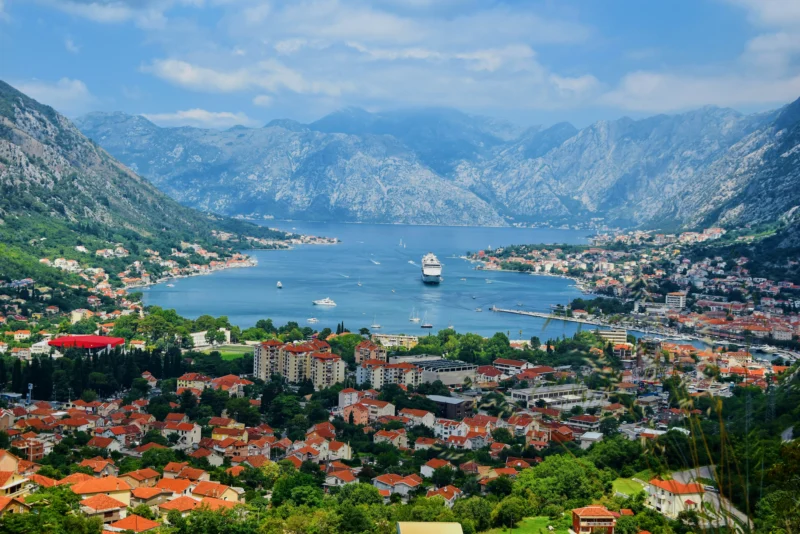
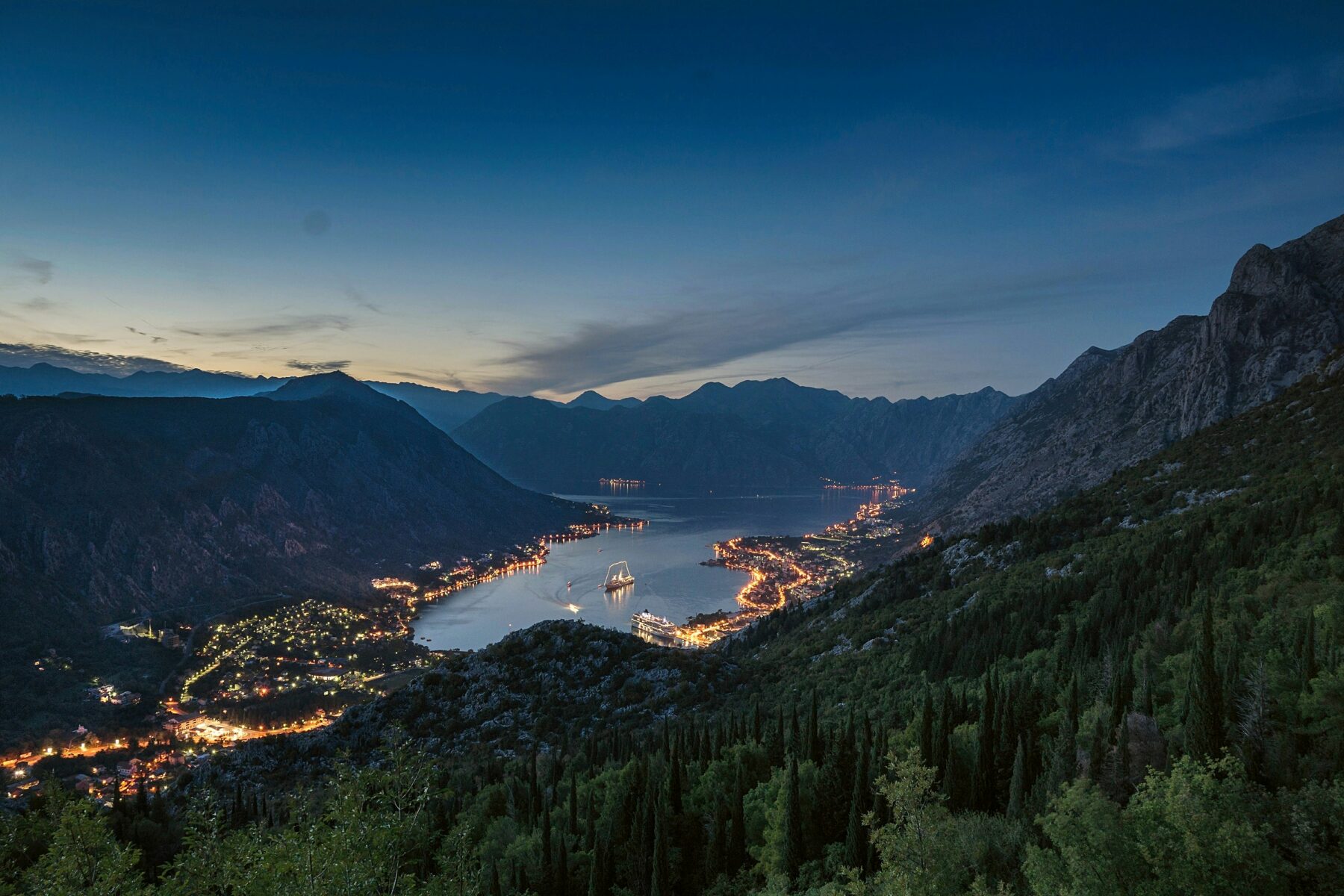
The bay is not one body of water but a series of connected inlets, each with its own character. The outer bay opens toward the Adriatic near Herceg Novi, broad and relatively exposed. As you move inland it narrows through the Verige Strait — barely 300 meters wide at its tightest point — and opens again into the inner bay, which is ringed almost entirely by mountains. This inner section is where the drama concentrates: the water is calmer, the peaks closer, and the light in the afternoon turns the whole scene into something that looks impossibly composed.
The drive around the bay is the classic way to take it in. The road hugs the shoreline almost the entire way, passing through a dozen small towns, each with its own church, its own small harbor, and its own pace. The full circuit takes several hours if you stop often — and you will stop often.
Kotor Old Town
The fortified old town of Kotor sits at the innermost point of the bay, backed hard against the cliff face of Mount Lovten. The Venetians ruled here for nearly four centuries and left their mark everywhere: in the lion reliefs carved above doorways, the narrow alleys that seem designed to lose you, and the elegant Romanesque churches packed into a surprisingly small space. The Cathedral of Saint Tryphon, built in the 12th century, anchors the main square and rewards anyone who lingers inside.
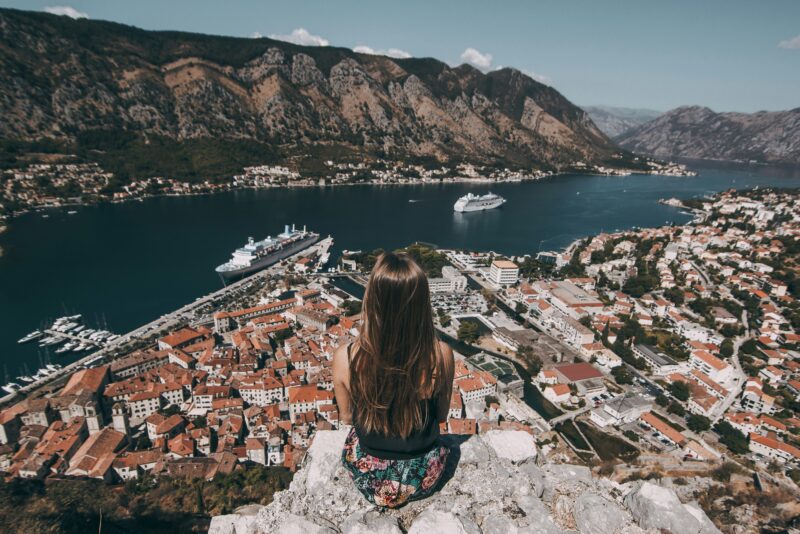
The city walls are Kotor’s defining feature. They snake up the cliff behind the old town for nearly five kilometers, rising 1,350 steps to the fortress of San Giovanni high above. The climb is steep and exposed, especially in summer heat, but the views from the top — the old town below, the bay stretching out in both directions, the mountains across the water — are among the finest in the region. Start early, bring water, and take your time.
The old town’s cats are not incidental. Kotor has been associated with cats since Venetian sailors brought them aboard to control rats, and the city embraces the connection openly. There’s a cat museum, cat-themed shops, and a feline population that treats the old town as its personal property. They add something to the atmosphere rather than detracting from it.
Perast and the Island Churches
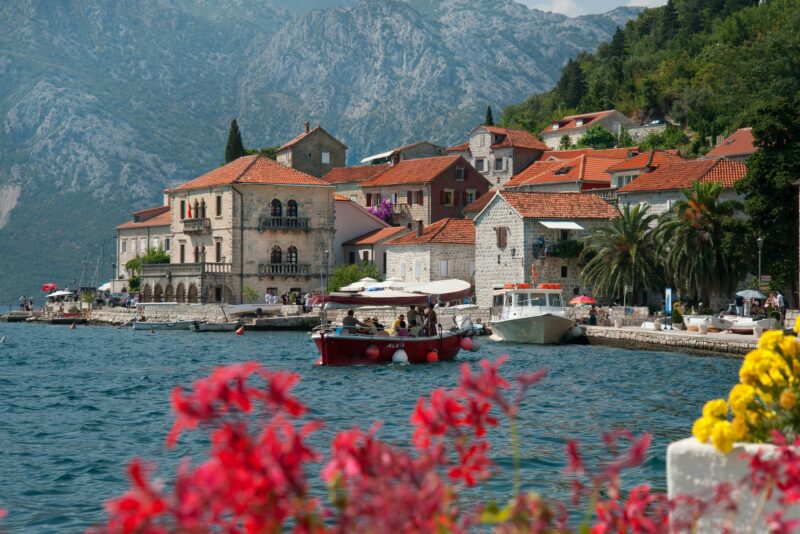
Perast is a small Baroque town on the northwestern shore of the inner bay, with a main street of crumbling palazzi and almost no cars. In its 17th-century heyday it was a significant maritime power, producing sea captains who commanded fleets for Venice and Russia alike. That era is long past, but the architecture survives and the setting — right on the water, with two small islands just offshore — is extraordinary.
The two islands are the reason most people stop in Perast. Our Lady of the Rocks is an artificial island, built up over centuries by local sailors who dropped stones into the bay after each safe return from sea. The small church on it contains an unusual collection of votive offerings — silver tablets, jewelry, and a tapestry embroidered over 25 years by a local woman using her own hair. The other island, Saint George, holds a Benedictine monastery and is closed to visitors, which somehow makes it more compelling.
Herceg Novi and the Outer Bay
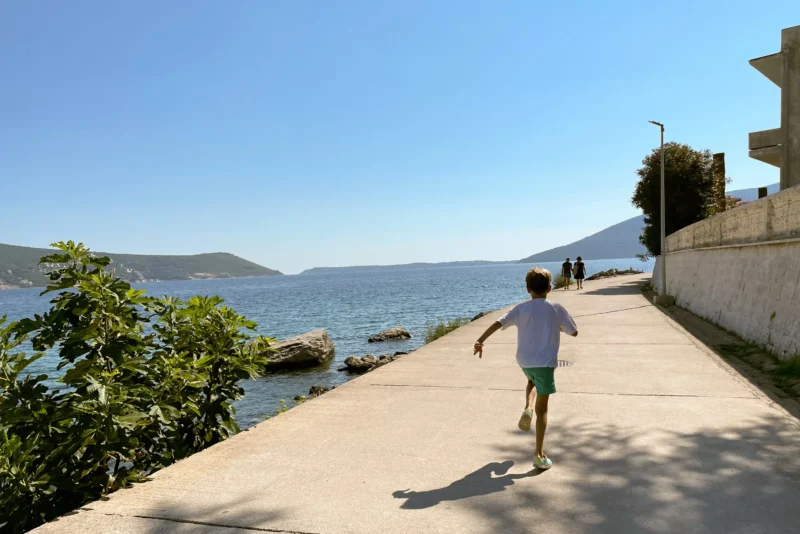
At the mouth of the bay, Herceg Novi is the most Mediterranean of the bay’s towns — warmer, more open, with a long promenade and a different rhythm from the sheltered interior. The old town climbs steeply from the waterfront in a tangle of stairs and terraces covered in bougainvillea, and the fortress at the top gives a sweeping view across the bay entrance toward Croatia. Herceg Novi gets more sun than anywhere else on the bay and fewer visitors than Kotor, making it worth an overnight stay rather than just a passing glance.
Getting Around
The bay is compact enough that you can base yourself in one town and reach the others easily. Kotor is the most obvious base, with the most accommodation and the most to see on foot. Renting a car gives you the most flexibility — the road around the bay is well-maintained and not difficult to drive, though summer traffic near Kotor can be slow. A small car ferry crosses the Verige Strait between Kamenari and Lepetane, cutting the circuit considerably if you want to avoid doubling back.
The nearest airport is Tivat, right on the bay itself — one of the more dramatic arrivals in Europe, with the plane banking hard over the water before landing. Podgorica is about an hour away with more international connections. From Dubrovnik, the bay is roughly two hours by car, making it a natural add-on to any trip along the southern Dalmatian coast.
When to Go
The bay is beautiful year-round, but July and August bring real crowds, particularly to Kotor old town, which can feel overwhelmed when cruise ships are in port. May, June, and September are the sweet spots — warm enough for swimming, uncrowded enough to actually enjoy the streets. In October the light softens, the tourist infrastructure thins out, and the mountains above the bay show the first suggestion of autumn color. Winter is quiet and mild by European standards, and seeing the old town nearly empty, the fortification walls reflected in still water, is its own reward.