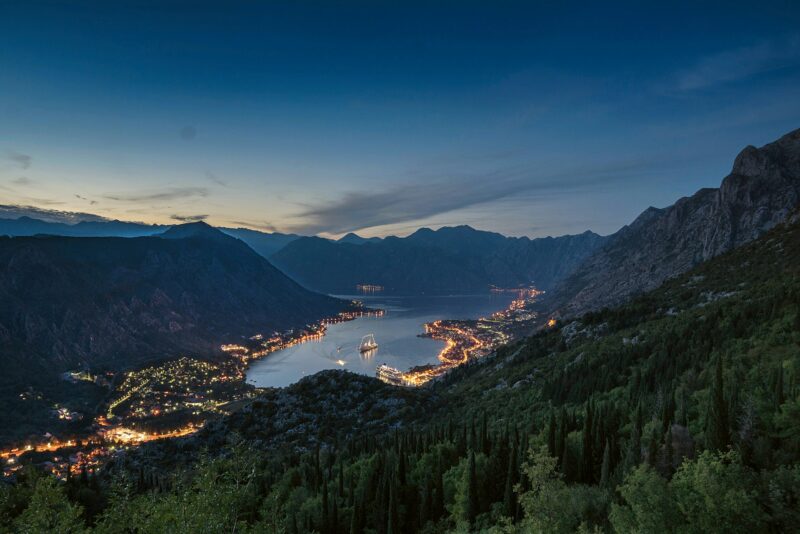




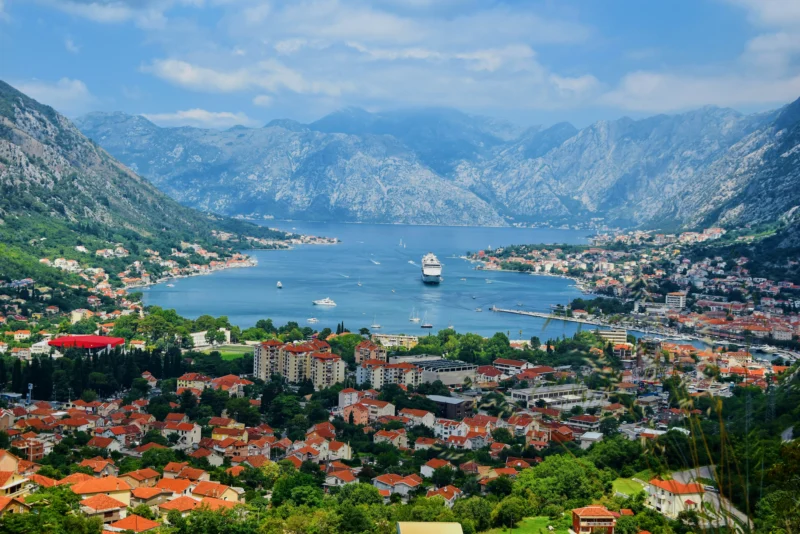
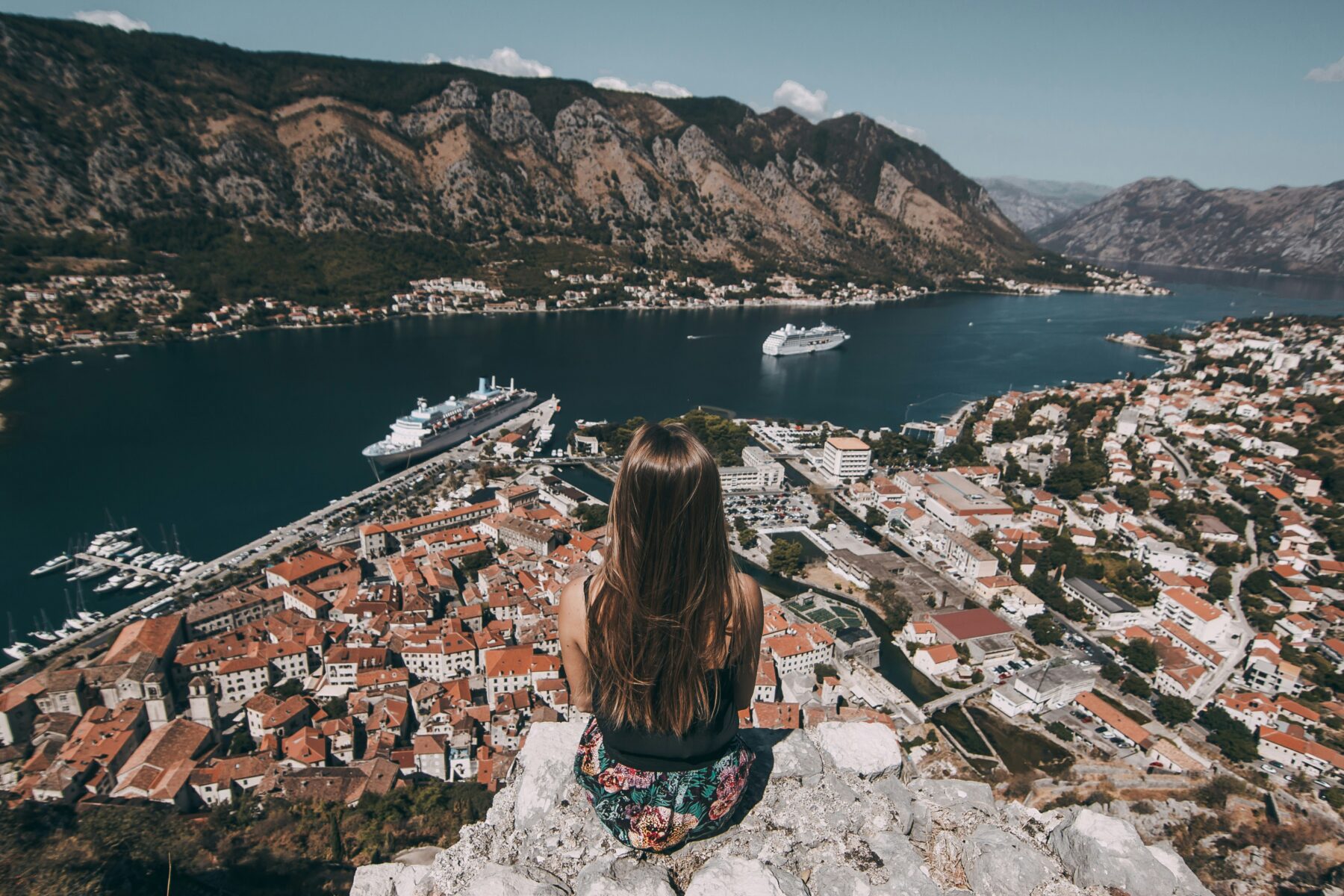
Tucked inside a natural harbor ringed by limestone mountains, Kotor is one of the best-preserved medieval towns on the Adriatic. Its Venetian-era walls snake up the hillside to a fortress high above, and the marble-paved old town below is a maze of churches, piazzas, and cats — Kotor’s unofficial mascots. It’s compact enough to explore in an afternoon, but worth lingering far longer.
The Old Town
Kotor’s old town is a UNESCO-listed enclave of Venetian architecture, Romanesque churches, and narrow lanes that feel genuinely unchanged. The Cathedral of Saint Tryphon dates to the 12th century and holds a collection of Venetian silver reliquaries that most visitors walk past too quickly. The Piazza of Arms at the main gate and the smaller squares beyond are connected by a logic that only becomes clear once you’ve walked through them a few times and stopped trying to navigate by map. The cats are everywhere — well-fed, unbothered, and photographed more than the architecture.
The Walls
The fortifications that climb the mountain behind the old town are Kotor’s most demanding and most rewarding attraction. The path rises steeply through 1,355 steps to the Fortress of Saint John at 260 meters, with the town and the bay spreading out below in increasing scale as you climb. Start early in the morning before the sun hits the exposed sections of the wall, bring water, and expect company on busy summer days. The views from the top — the bay, the mountains, the labyrinthine streets directly below — make the climb entirely worth the effort.
The Bay
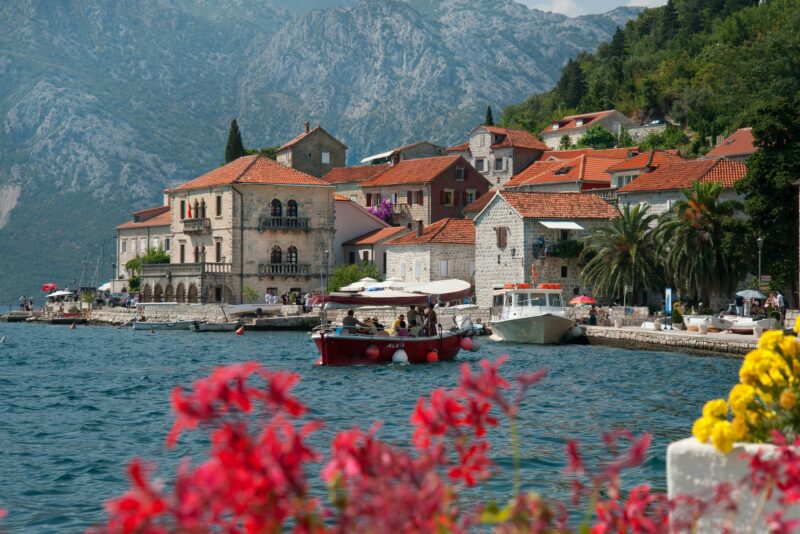
The Bay of Kotor isn’t a conventional open sea — it’s a series of interconnected inlets that reach 28 kilometers inland from the Adriatic, giving it the character of a fjord more than a Mediterranean bay. The drive around its perimeter passes through half a dozen villages that barely appear on tourist itineraries. Perast, 12 kilometers north of Kotor, holds two small islands accessible by taxi boat, one with a church and a remarkable collection of votive paintings. Risan, further around the bay, has Roman mosaics beneath its streets and almost no visitors.