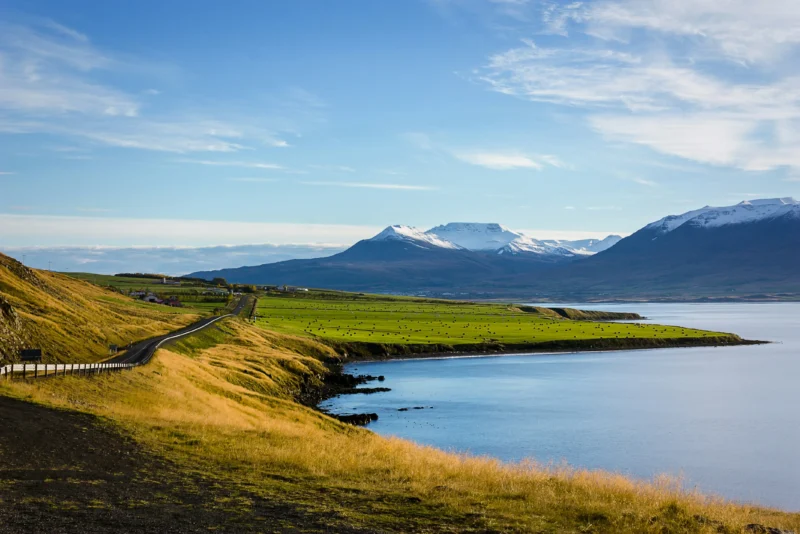

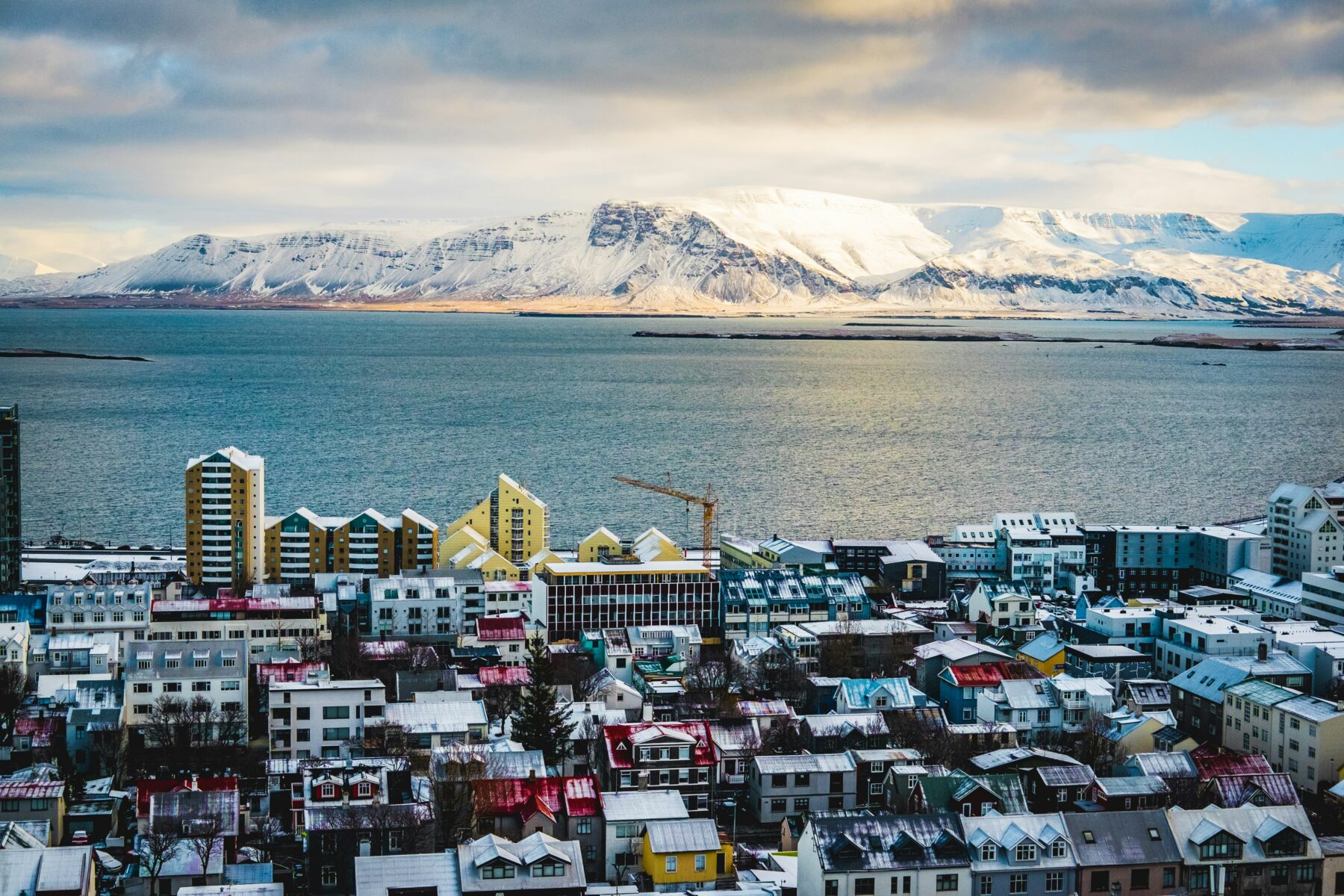
Iceland’s compact and colorful capital punches well above its size. Wander the rainbow-painted streets of the old town, climb to the top of Hallgrímskirkja church for sweeping views over the rooftops and sea, and warm up in one of the city’s legendary geothermal pools. Reykjavík is a base for Northern Lights hunting in winter and midnight sun adventures in summer — but the city always has something worth staying for.
How to Not Get Wet
The geothermal pools are one of the better answers to Iceland’s chronic damp. Vesturbæjarlaug and Sundhöll Reykjavíkur are the neighborhood pools where locals actually swim — less crowded and more atmospheric than the facilities built for tourists. The outdoor hot pots, gradated from warm to just-bearable, are where Reykjavíkurs go after work, and sitting in 42-degree water while it rains seems like exactly the right response to the climate. The Sky Lagoon, on the edge of the city, offers the same experience with a dramatic ocean-facing setting for those who want both the steam and the view.
Getting Out of the City
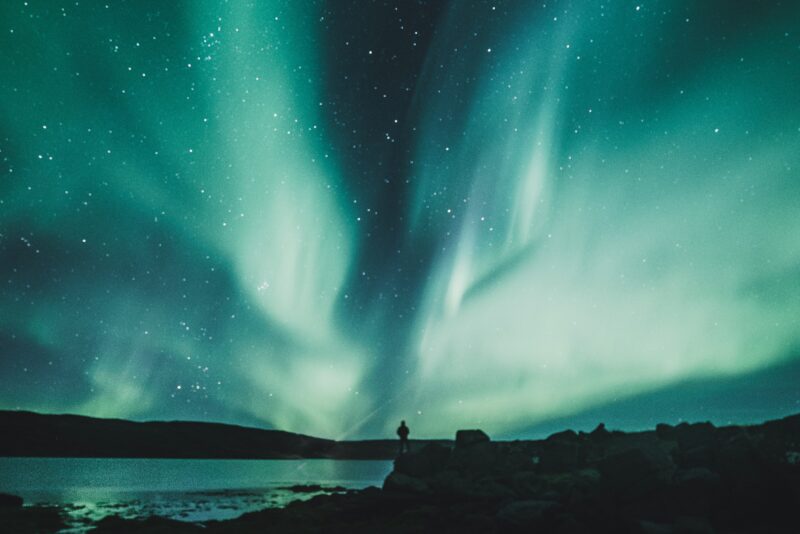
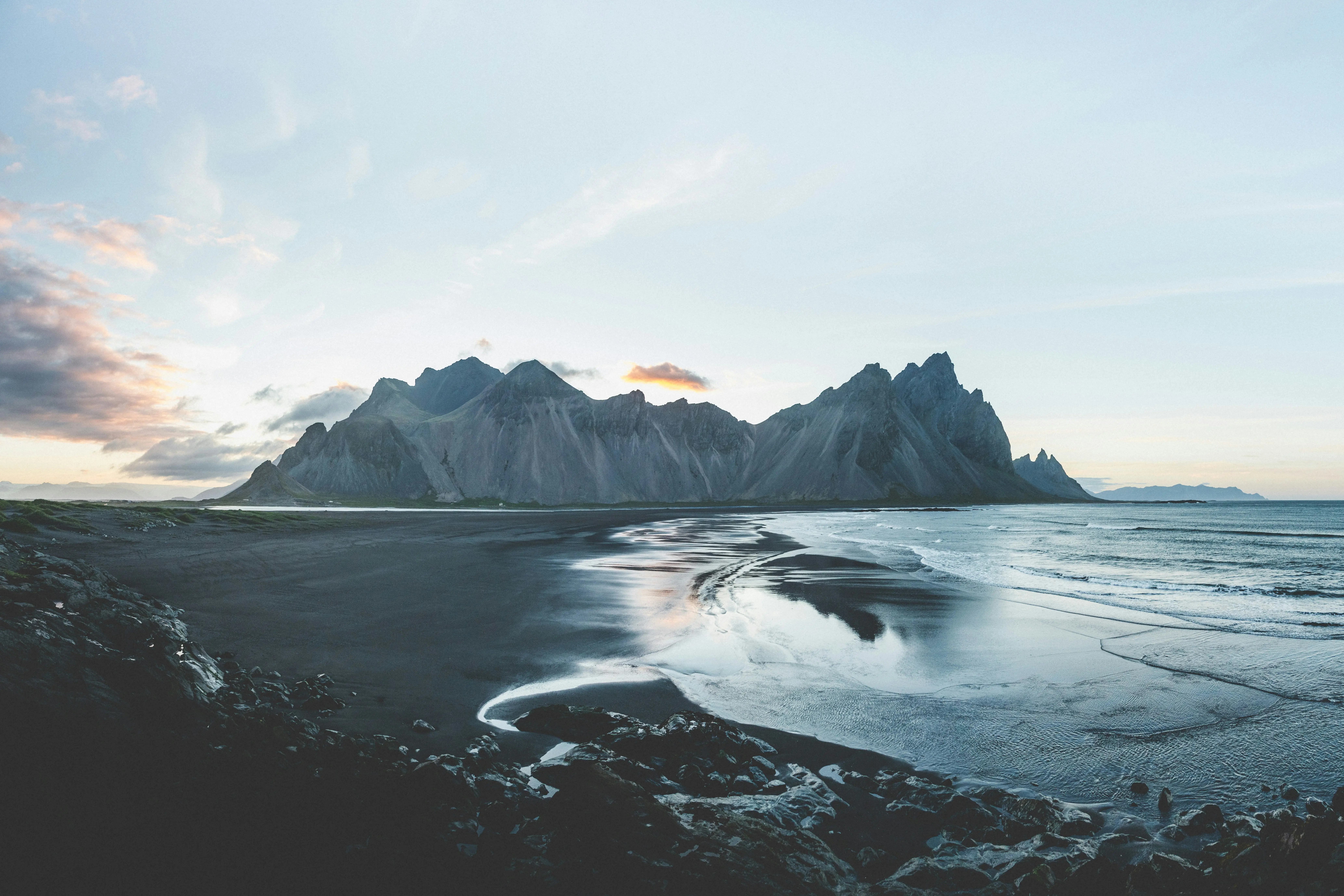
Reykjavík’s position makes it the natural base for Iceland’s most visited sites. Þingvellir, Geysir, and Gullfoss are all within an hour’s drive, and the South Coast’s waterfalls and black sand beaches are reachable in under two. The Northern Lights are visible from the city itself on a clear winter night, but the best viewing requires getting away from the light pollution — the Reykjanes Peninsula and the road toward Þingvellir both provide a significant improvement in sky conditions. Whale watching tours run from the old harbor from May through September, with humpback sightings reliable enough to constitute the expected rather than the exceptional.
When to Go
Summer brings the midnight sun — actual darkness doesn’t fall between mid-May and late July, and the effect is both disorienting and, once your body adjusts, quietly electric. Winter offers the reverse: short days, persistent cold, and the possibility of the Northern Lights on any clear night from September through March. The shoulder seasons of April–May and September–October offer the best of both — manageable crowds, reasonable prices, and the chance to experience either long evenings or the first or last glimpses of aurora. Reykjavík’s December markets, centered around Ingólfstorg square, are worth planning around if you find yourself there in winter.