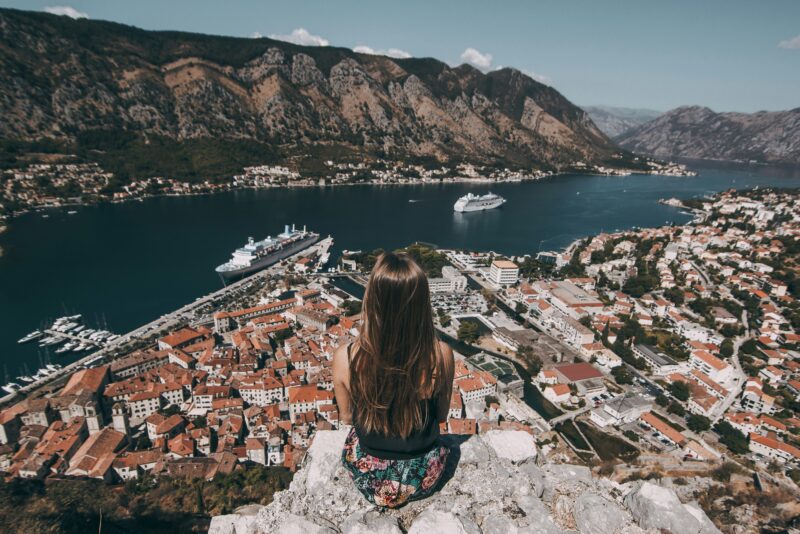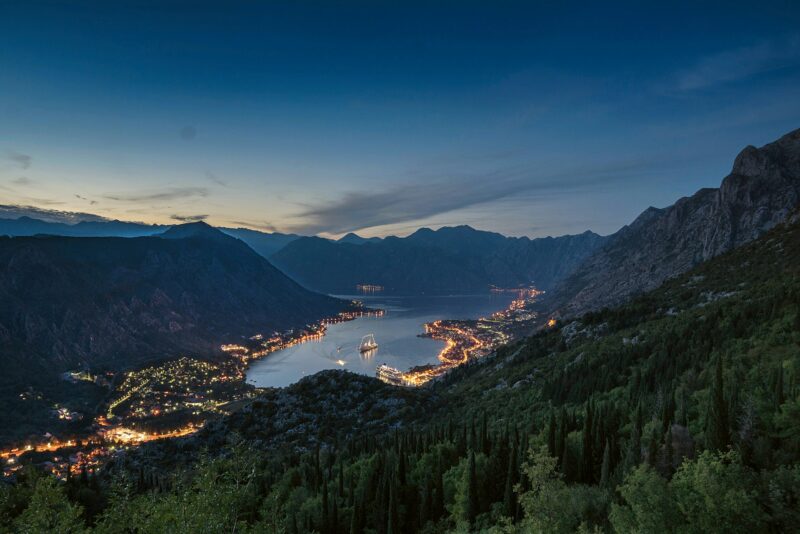





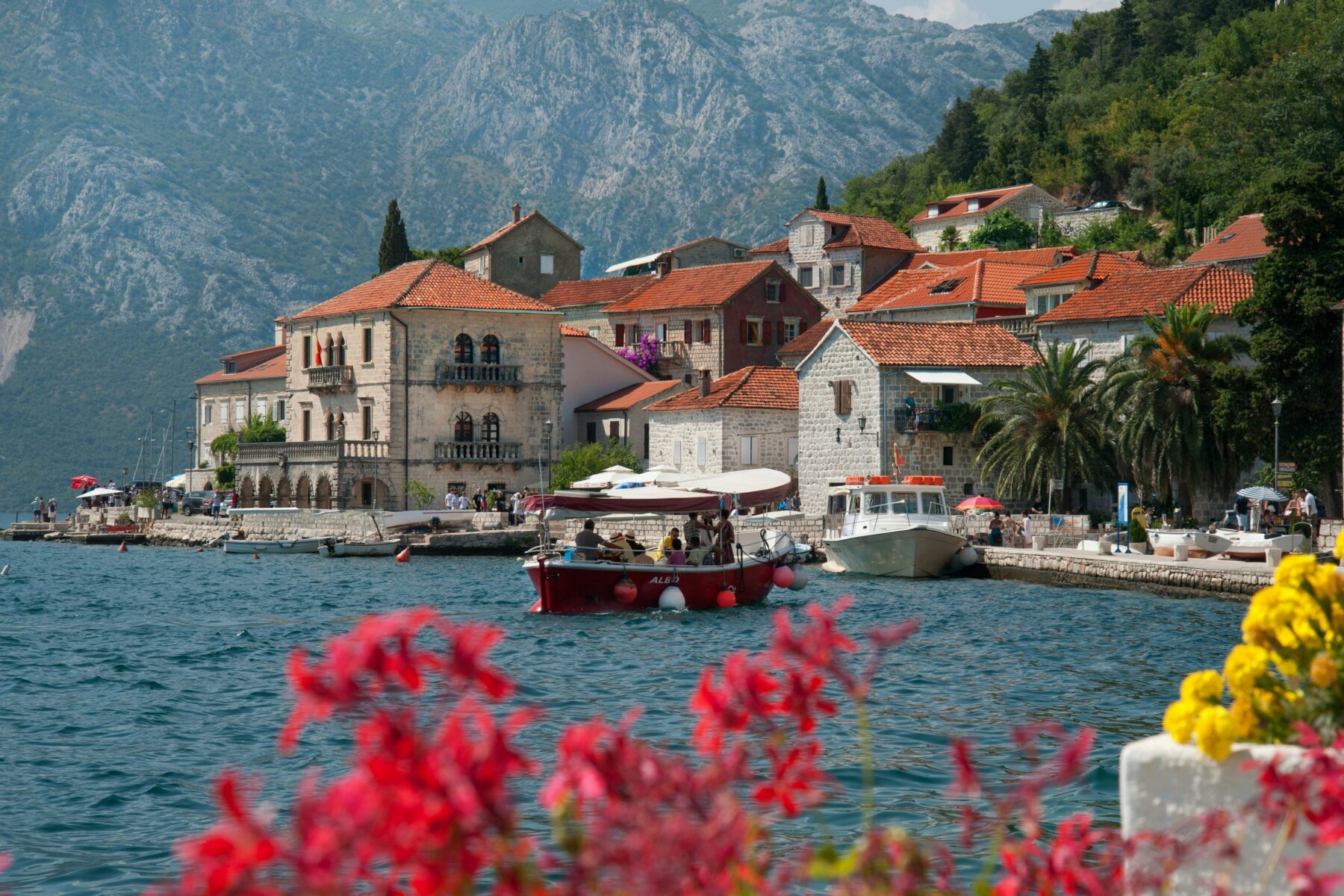
Perast sits on the northwestern shore of the inner Bay of Kotor, a town of perhaps 350 people that was once one of the most important maritime centers on the Adriatic. Its population has been shrinking for centuries. Its architecture has not changed much since the 18th century. And on a quiet morning in May or October, with the bay perfectly still and the two offshore islands floating like something out of a painting, it is one of the most beautiful places in Europe.
It takes about ten minutes to walk from one end of Perast to the other. Most visitors come for an hour or two, take a boat to the islands, have lunch at one of the waterfront restaurants, and leave. That is enough to see the town. It is not quite enough to understand it.
A Town Built on the Sea
Perast reached its peak in the 17th and 18th centuries, when it was a semi-autonomous city under Venetian protection with its own fleet, its own school of seamanship, and a reputation that extended well beyond the Adriatic. The town produced some of the most sought-after sailors and naval commanders of the era. Peter the Great of Russia famously sent young noblemen to study navigation here, and several Perastians ended up commanding ships in the Russian Imperial Navy. The palazzi that line the waterfront were built on that wealth — sixteen of them in total, by families whose names still appear on plaques and memorial tablets throughout the town.
That era ended with the fall of Venice in 1797, and Perast never quite recovered economically. But what looked like decline preserved everything. There was no money for redevelopment, no pressure to modernize, no incentive to tear down the old and build new. The Baroque palaces were left to weather gently. The churches stayed open. The town became, almost by accident, a perfectly preserved relic of a vanished Mediterranean world.
The Two Islands
The islands just offshore — Our Lady of the Rocks and Saint George — are the main reason most people make the detour to Perast, and they justify the trip entirely.
Our Lady of the Rocks is the more accessible of the two and has a stranger history than it first appears. The island is artificial, built up over several centuries by local sailors who had a custom: whenever a ship returned safely from a dangerous voyage, the crew would drop rocks into the bay at this spot. Over time the accumulated stones formed a small island, and a church was built on top of it in 1452. The tradition of adding rocks continued for centuries — and still continues today, in a ceremonial form, on the feast of the Assumption each year, when boats go out and stones are dropped into the water.
The church interior is worth a long look. The walls and ceiling are covered with 68 paintings by Tripo Kokolja, a 17th-century Baroque painter from the region. Along the sides hang hundreds of votive tablets — small silver plaques left by sailors and their families as offerings of thanks, depicting ships in storms, miraculous escapes, and the moments of danger that prompted the prayers. Most striking of all is the icon of the Madonna, which has a tapestry beside it embroidered by a local woman named Jacinta Kunić over a period of 25 years in the 17th century. She used her own hair, woven into gold and silver thread. The aging is visible in the tapestry: the sections she embroidered as a young woman are lighter; the hair darkens as the decades pass.
Saint George island, a few hundred meters away, is occupied by a Benedictine monastery that dates to the 12th century and is closed to the public. Its cypress trees are visible from shore and from the water, and the island has a quality of purposeful inaccessibility that makes it impossible not to stare at. Boat tours from Perast’s waterfront circle both islands; the trip to Our Lady of the Rocks takes about five minutes.
Walking the Town
The main street of Perast runs along the waterfront for perhaps 700 meters, and most of what there is to see is within a short walk of it. The Church of Saint Nicholas dominates the waterfront at the center of town — an imposing 17th-century structure that was never quite finished, its campanile left incomplete when the money ran out. The tower is now the tallest structure in Perast and can be climbed for a view over the rooftops and across the water to the islands.
The Bujović Palace at the eastern end of the waterfront has been converted into a small museum with nautical instruments, paintings, documents, and objects from Perast’s maritime era. It is worth an hour if you want context for what you are looking at. The other palaces are mostly private, but the exteriors alone — the stone loggias, the coats of arms above doorways, the slightly melancholy grandeur of buildings built for a prosperity that is long gone — tell a story that no museum exhibit quite captures.
Behind the main street, a handful of lanes climb the hillside through a quieter residential Perast of cats, small gardens, and laundry strung between windows. The Church of Our Lady of the Angels sits up here, away from the waterfront, and tends to be completely empty.
Eating and Staying
The restaurant options in Perast are limited but good. The waterfront places serve fresh fish, grilled seafood, and the bay’s own oysters and mussels, which are farmed in the calmer inner sections of the water and are genuinely excellent. The setting — tables right at the water’s edge, the islands visible, the mountains behind — makes everything taste better than it has any right to.
Accommodation in Perast itself is sparse — a handful of apartments and small guesthouses in the old palaces. Staying overnight rather than day-tripping from Kotor is worth it if you can arrange it. The town empties completely after the last tour groups leave in the late afternoon, and what remains — the quiet, the reflections on the water, the bats coming out over the bay at dusk — is the version of Perast that the daytime crowds never see.
Getting There
Perast is about 12 kilometers from Kotor by road, following the shore of the inner bay. By car it takes around 20 minutes. There is no direct bus service, but local taxis and rideshares make the trip easily. Some tour operators in Kotor run half-day excursions that include Perast and a boat trip to the islands, which is a reasonable option if you don’t have a car.
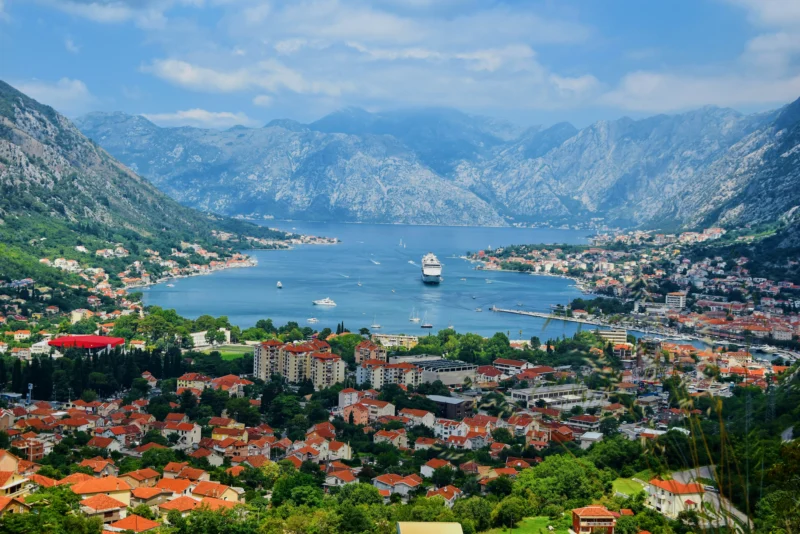
The road from Kotor to Perast is one of the most scenic drives in Montenegro — narrow, hugging the water, with the mountains rising immediately to the left and the bay opening out to the right. It is worth taking slowly even if you have done it before.
When to Go
Perast is small enough that even modest crowds can feel like a lot. In July and August the waterfront fills up with day-trippers, the boat queue for the islands gets long, and the restaurants run out of tables by noon. May and June are warm, green, and relatively quiet. September and October are ideal — the summer visitors have gone, the water is still warm enough to swim, and the light on the bay in the late afternoon is extraordinary. In winter Perast is almost entirely to itself, the palaces locked up, the waterfront empty, the islands unreachable unless you know someone with a boat. That version of the town has its own appeal.